
Il Wha Hong
Overview
EDUCATION
2003 École Nationale Supérieure des Beaux-Arts, Paris, France
DNSEP — Diplôme National Supérieur d’Expression Plastique
Master’s Degree in Fine Arts (Gahyun Art)
SELECTED SOLO EXHIBITIONS
2026 La Fable des Étoiles Art Salon de H, Seoul, Korea
2025. Daughter of the Sea, Mother of the Forest Gallery Iho, Jeju, Korea
2025. The Forest Still Speaks Acheon Art Museum, Yeongam, Korea
2025. The Magic Forest. Passion Gallery, Seoul, Korea
2025. The Forest of Gaya. Gallery Marie, Seoul, Korea
2024. Forest is Color. Gallery The Key, Seoul, Korea
2024. Patterns of Time. Gahyun Art Gallery, Ilsan, Korea
2024 When Light Breathes Olmi Art Space, Seoul, Korea
2024 The Possibility of the Border Gallery MHK, Seoul, Korea
2024 As It Is Schengen Gallery, Gwangju, Korea
2024 The Notation of Sunlight Art Salon de H, Seoul, Korea
2024 Bonnui: Capturing the Diffusion of the Forest Gallery Venus, Hanam, Korea
2023 Hong Il Hwa: Crossing Boundaries Ami Art Museum, Dangjin, Korea
2023 Garden — Hong Il Hwa × d’strict Arte Museum, Jeju, Korea
2023. Color of Thorns
Niche Gallery, Tokyo, Japan
2023 The Forest Pium Museum, Goseong, Korea
2022 Épine ArtsKoco Gallery, Luxembourg
2022 Our Nature Espace Icare, Issy-les-Moulineaux, France
2022 La Forêt Gallery RuacH, Seoul, Korea
2020. Landscape Ephemeral Gallery Marie, Seoul, Korea
2020 Forest. ACC Project / Espace Rhizome, Changwon, Korea
2019 Elle GOT Interwired Studios, Seoul, Korea
2019 Haenyeo in Gotjawal. Jeju Sculpture Park, Jeju, Korea
2018. Madame Gallery Dam, Seoul, Korea
2018 La Corée Contemporaine. La Maison des Arts, Le Barcarès, France
Artist’s Statement
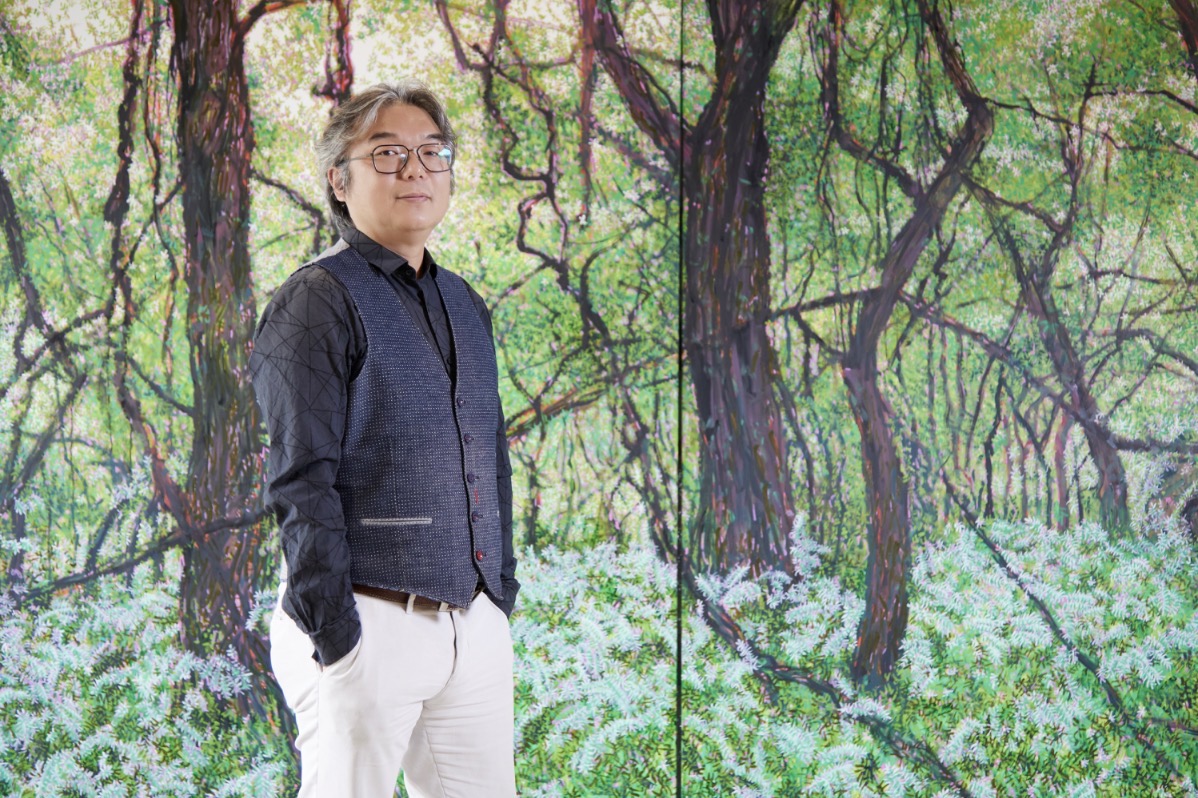
Hong Il-hwa’s practice explores the relationship between the human figure, popular imagery, and contemporary visual culture. Working across painting, drawing, and mixed media, she combines vivid color, graphic forms, and layered compositions to create images that move between portraiture, symbolism, and visual narrative.
The human face is a recurring subject in Hong’s work. Rather than treating portraiture as a direct record of identity, she transforms facial features into expressive and symbolic elements. Her figures often appear stylized, fragmented, or enlarged, reflecting the ways identity is shaped by memory, media, desire, and social perception.
Hong’s visual language is defined by bold color, simplified forms, and a dynamic tension between flatness and depth. Drawing on the aesthetics of popular culture, advertising, comics, and contemporary image-making, she creates paintings that are immediately accessible while retaining psychological and conceptual complexity. Familiar visual elements are reconfigured into scenes marked by ambiguity, tension, humor, and emotional distance.
Her practice examines the relationship between individuality and mass-produced imagery. Through the repetition, transformation, and layering of recognizable forms, Hong questions how images circulate and how personal identity is constructed within contemporary society. Her paintings occupy a space between the personal and the public, combining intimate emotional references with the visual codes of popular culture.
Through her distinctive use of color and composition, Hong Il-hwa creates works that are visually direct yet conceptually open-ended. Her paintings invite viewers to consider the unstable boundaries between reality and representation, private experience and collective imagery, and the individual face and the cultural images through which identity is understood.
Biography
Hong Il-hwa is a Korean contemporary artist whose practice explores the relationship between the human figure, popular imagery, and contemporary visual culture. Working across painting, drawing, and mixed media, she combines vivid color, graphic forms, and layered compositions to create images that move between portraiture, symbolism, and visual narrative.
A recurring subject in Hong’s work is the human face. Rather than presenting portraiture as a straightforward record of identity, she transforms facial features into expressive and symbolic elements. Her figures often appear stylized, fragmented, or enlarged, reflecting the ways in which identity is shaped by memory, media, desire, and social perception.
Hong’s visual language is characterized by bold colors, simplified forms, and a dynamic balance between flatness and depth. Drawing on the aesthetics of popular culture, advertising, comics, and contemporary image-making, she creates paintings that are immediately accessible while retaining psychological and conceptual complexity. Familiar visual elements are reconfigured into scenes that suggest ambiguity, tension, humor, and emotional distance.
Her practice also examines the relationship between individuality and mass-produced imagery. By repeating, transforming, and layering recognizable forms, Hong questions how images circulate and how personal identity is constructed within contemporary society. Her paintings often occupy a space between the personal and the public, combining intimate emotional references with the visual codes of popular culture.
Through her distinctive use of color and composition, Hong Il-hwa creates works that are both visually direct and conceptually open-ended. Her paintings invite viewers to consider the unstable boundaries between reality and representation, private experience and collective imagery, and the individual face and the cultural images through which identity is understood.
Works
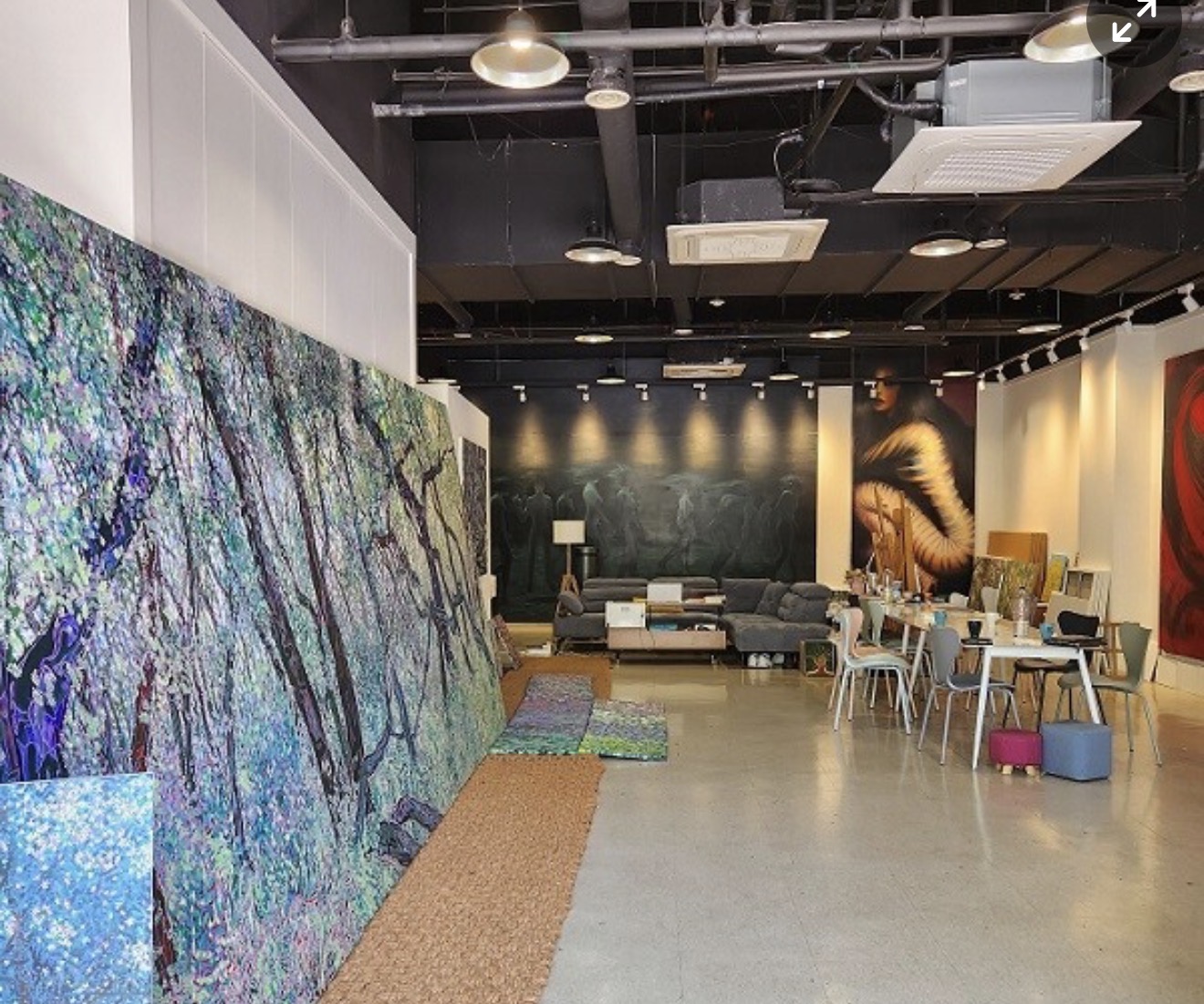
Oil on Linen 100x81cm 2014

Make Up Oil on Linen 100x81cm 2014
Oil on Linen 100x81cm 2014

Familiar Portrait 2 Oil on Linen 100x81cm 2014
Oil on Linen 73x116cm 2014

Familiar Portrait 1Oil on Linen 73x116cm 2014
Oil on Linen 100x81cm 2014

Familiar Portrait 3Oil on Linen 100x81cm 2014
Oil on Linen 100x73cm 2013

PersonaOil on Linen 100x73cm 2013

